Hidden Asbestos Risks: What You Must Know Before Renovating
CJ Constructors • August 19, 2026
Planning a major remodel in a house built before 1990 comes with serious responsibilities. At CJ Constructors we prioritize safety above all else when opening up walls and tearing up floors in older Brampton properties. The hidden asbestos risks in these homes can quickly turn a simple cosmetic update into a hazardous situation.
Before swinging a hammer, property owners need to understand what materials pose a threat. Proper abatement protects your family and ensures your renovation stays compliant with local health and safety regulations.
Important Steps to Cover:
- Understanding Material Hazards in Older Homes
- What materials in old houses commonly contain asbestos?
- Red Flags When Evaluating Abatement Providers
- Questions to Ask Before Hiring a Contractor
Understanding Material Hazards in Older Homes
Asbestos is completely safe when it is intact and undisturbed. The danger arises during demolition when old building materials are broken apart, releasing microscopic fibers into the air. Once inhaled, these fibers cause severe long-term respiratory problems.
You cannot identify asbestos just by looking at it. The only way to know for sure is to have a certified technician take physical samples and send them to a lab for testing. Attempting to rip out old flooring or ceiling tiles without testing first exposes everyone in the house to unnecessary risk.
What materials in old houses commonly contain asbestos?
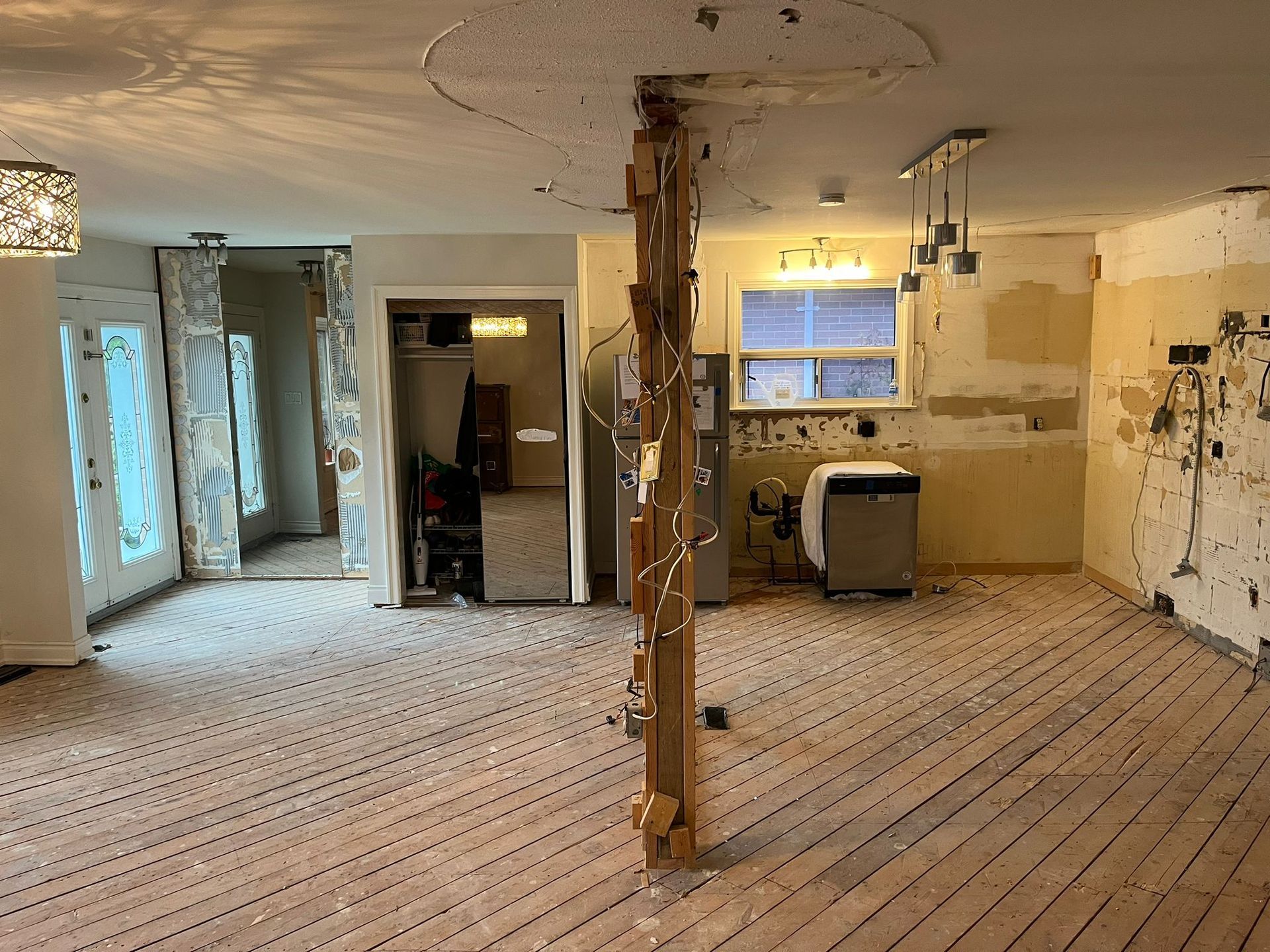
In homes built decades ago, asbestos was mixed into hundreds of standard building products for its fire resistance and durability. We frequently find it hiding in vinyl floor tiles, linoleum backing, and the mastic adhesive used to glue them down. It is also common in acoustic ceiling tiles, popcorn ceiling textures, duct insulation, and the joint compound used to finish drywall seams.
Red Flags When Evaluating Abatement Providers
Choosing the right company for hazardous material removal requires careful vetting. Not all demolition crews are legally qualified to handle contaminated debris.
- Skipping the Testing Phase: A reputable contractor will never guess if a material is hazardous. They will insist on professional lab testing before starting the job.
- Lack of Containment Plans: Avoid any company that plans to remove materials without setting up negative air pressure machines and thick plastic vapor barriers.
- Vague Disposal Methods: The contractor must provide a clear plan for double bagging the waste and transporting it to a certified disposal facility.
- Missing Certifications: If a provider cannot produce valid, up to date abatement certifications and specific liability insurance, do not hire them.
Questions to Ask Before Hiring a Contractor
You need total confidence in the team handling your home. Asking the right questions upfront prevents dangerous mistakes and keeps your renovation on schedule.
- Containment Strategy: How will you seal off the work area to protect the rest of my house from airborne dust?
- Air Clearance Testing: Will a third party conduct air quality tests after the removal to guarantee the house is safe to re-enter?
- Work Timeline: How many days will the containment zones need to stay up, and when can the regular renovation crew safely begin their work?
- Regulatory Compliance: Will you handle all the necessary environmental permits and provide the final disposal manifests?
Moving Forward Safely With Your Renovation
Verifying the air is clean and the site is clear gives you the green light to focus on the fun parts of remodeling. If you suspect your older home contains hazardous materials, do not take the risk of handling it yourself. Reach out to our team today to schedule professional testing and safe abatement services.
Share This Blog